1. Changes began as early as December 2019
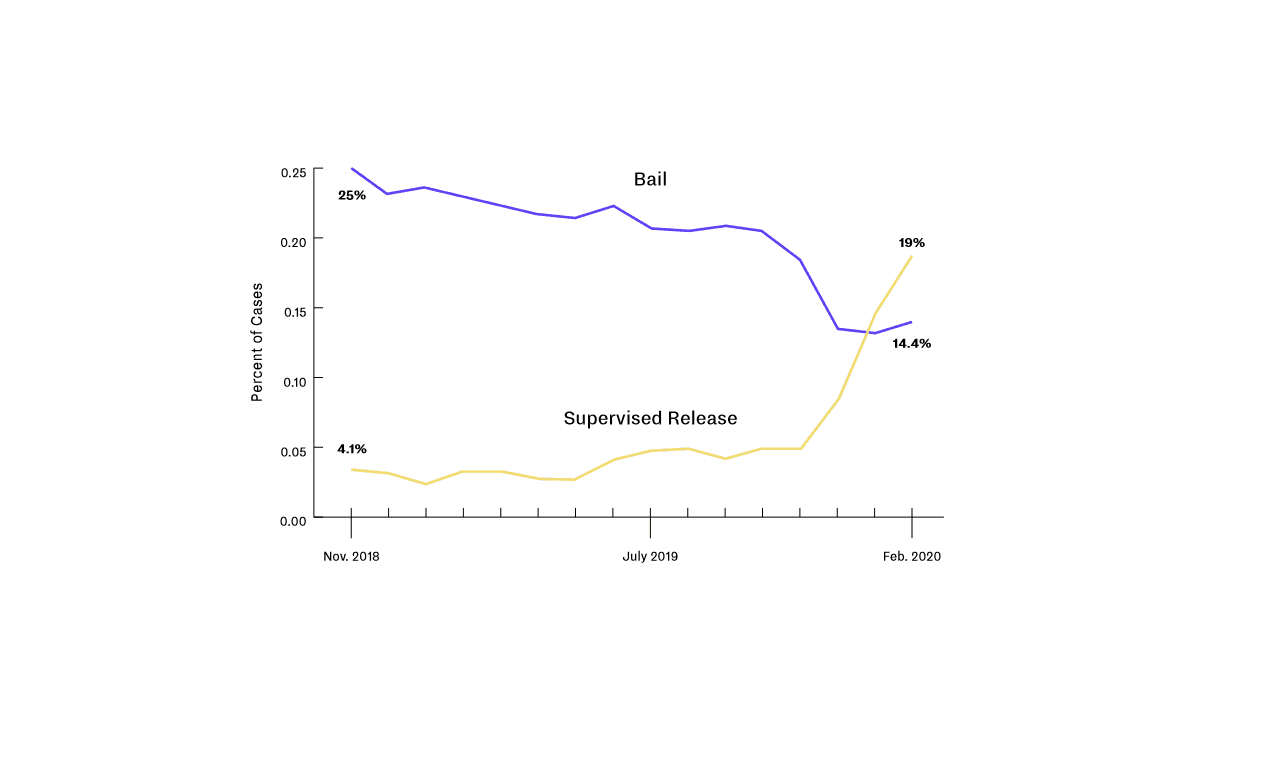
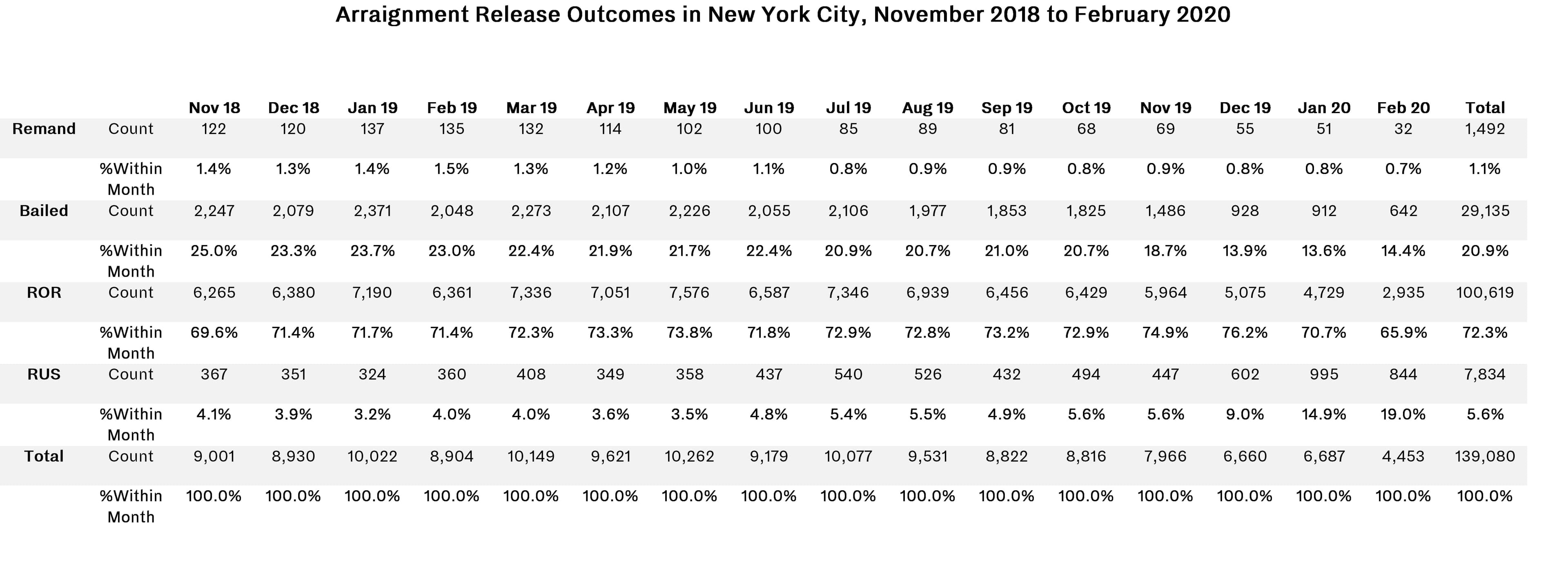
Beginning in January 2020 And for the first time, Supervised Release is more likely to be set as a pretrial release condition than monetary bail. Supervised Release, which links individuals on pretrial release to a social worker, was piloted in Queens in 2009 and expanded citywide in 2016. In December 2019, the City removed eligibility criteria for entry into Supervised Release, including making it available to all violent felony
arraigned individuals. Supervised Release as a proportion of pretrial release decisions has gone from about 3.2 percent of pretrial release decisions in January 2019 and 4 percent in February 2019 to 14.9 percent in January 2020 and 19 percent in February 2020. By comparison, usage of monetary bail has gone from 23 to 14 percent.
2. Even where judges retain greater discretion to set monetary bail, pretrial release decisions are changing.
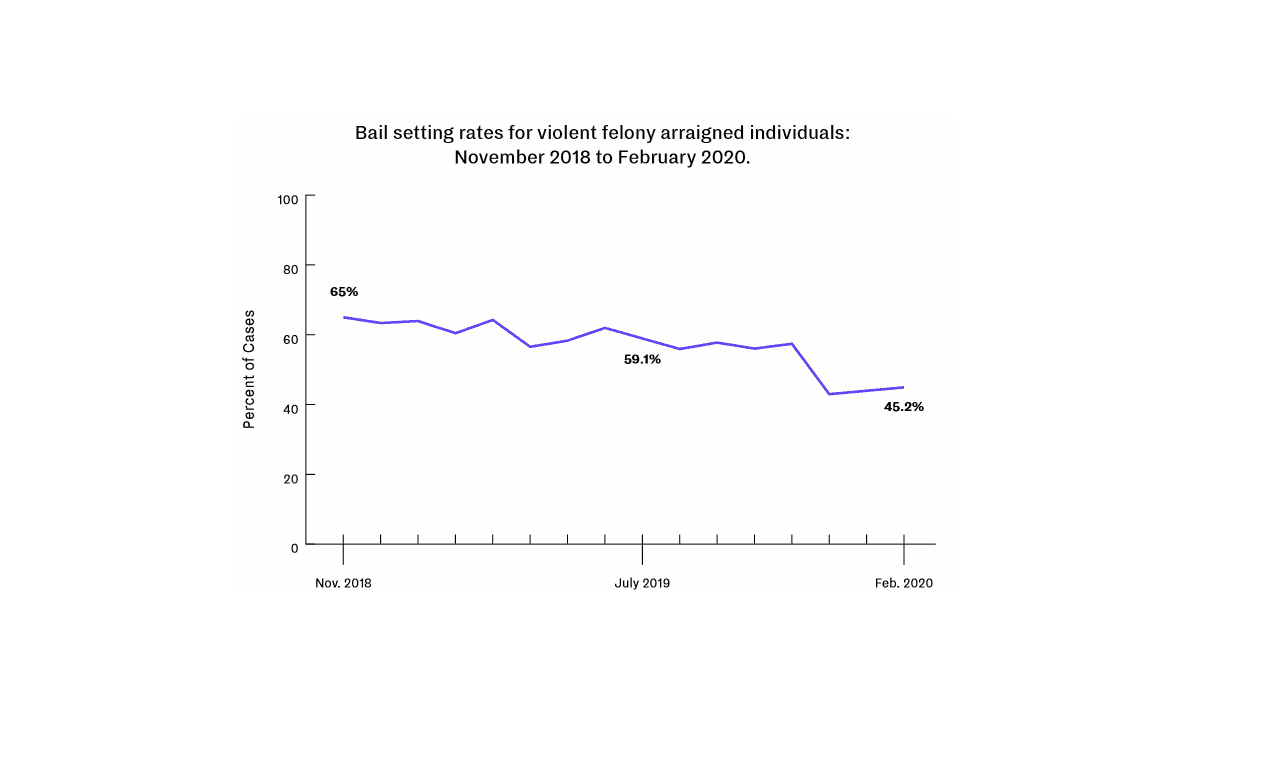
Despite having the ability to set money bail on most violent felony arraigned individuals, judges have cut back usage of monetary bail from about 65 percent of cases to 38.7 percent in January 2020 and 45.2 percent in February 2020. This increase is almost entirely due to greater use of Supervised Release and can be tied to the removal of eligibility restrictions on program entry in December 2019. This suggests that even when given discretion (and more options), judges are willing to set nonmonetary conditions of pretrial release.
3. Changes began as early as December 2019.
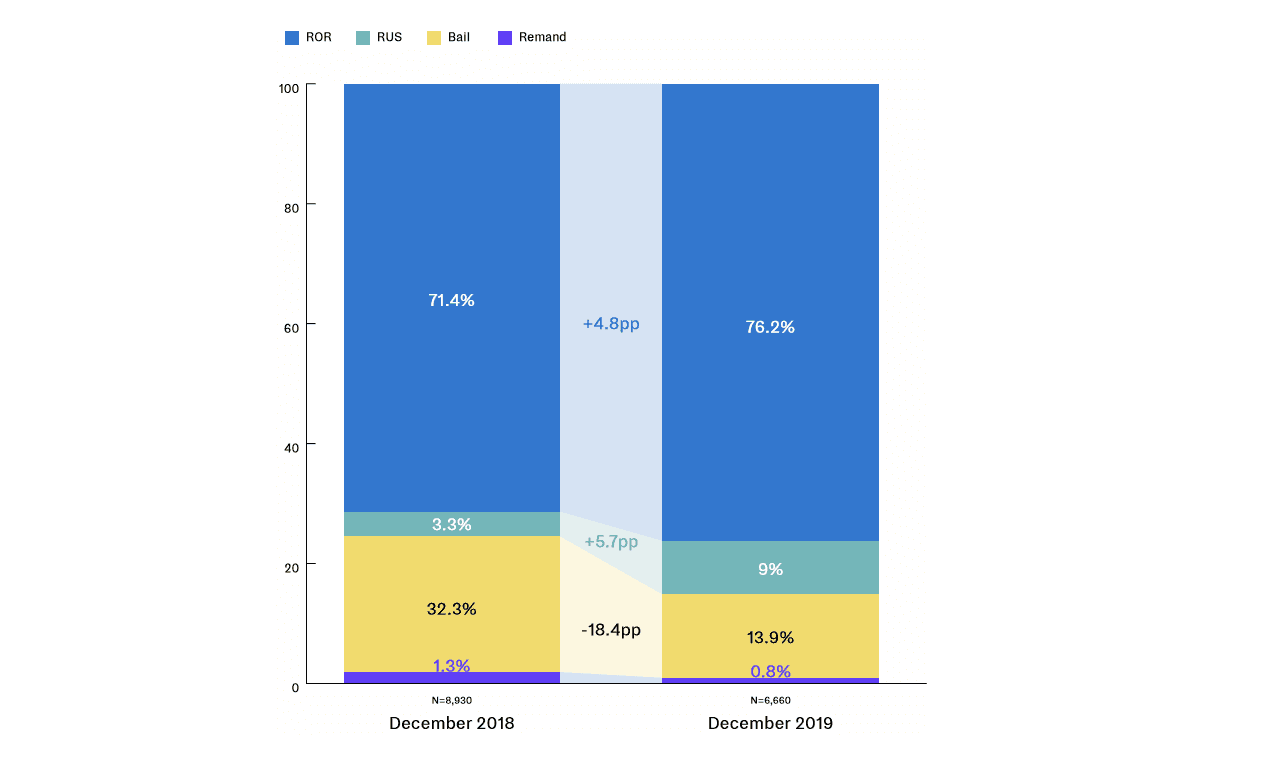
While the state’s new bail statute did not take effect until January 2020, the data show that pretrial release decisions changed dramatically in December 2019 as judges prepared for bail reform. Another factor driving these changes was the expansion of Supervised Release on December 1st, 2019.
4. There is significant variation by borough in pretrial release decisions.
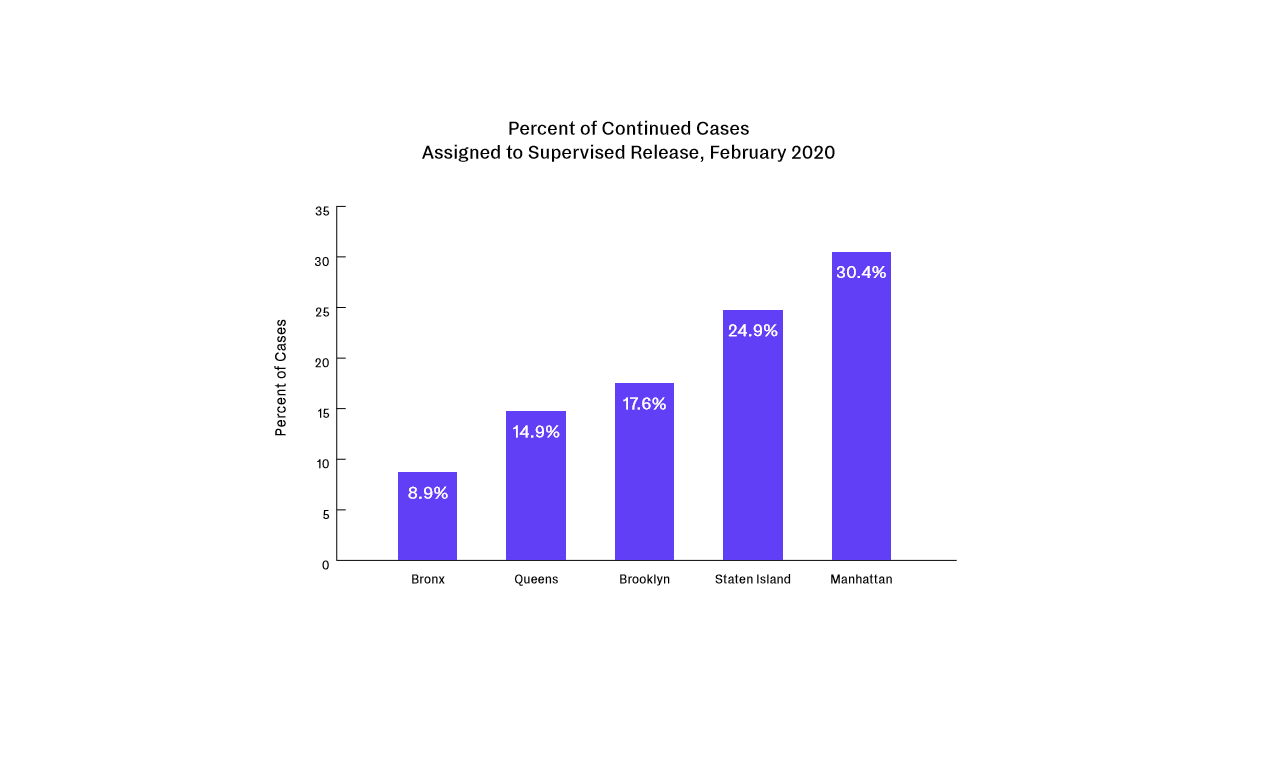
While there are some clear citywide trends (such as increases in Supervised Release and declines in money bail), there is also significant borough-based variation. For example, in February 2020, Supervised Release utilization ranged from 8.9 percent of all continued cases in the Bronx to 30.9 percent in Manhattan.
5. With only two months of data in 2020, it is too early to tell how pretrial release decision making will change..
It is important to read any individual months’ worth of data with caution, given that the number of pretrial release decisions is small enough that random variation can skew the data. Also, it takes time for judges, prosecutors and defense attorneys to adjust to changes as large as the ones introduced in the new bail reform legislation. More time will help clarify whether month-by-month changes indicate meaningful trends.
Release Assessment Full Data

Expanded charts and things
Deeper Dive
Citywide
Data By Borough
Data By Charge Severity